
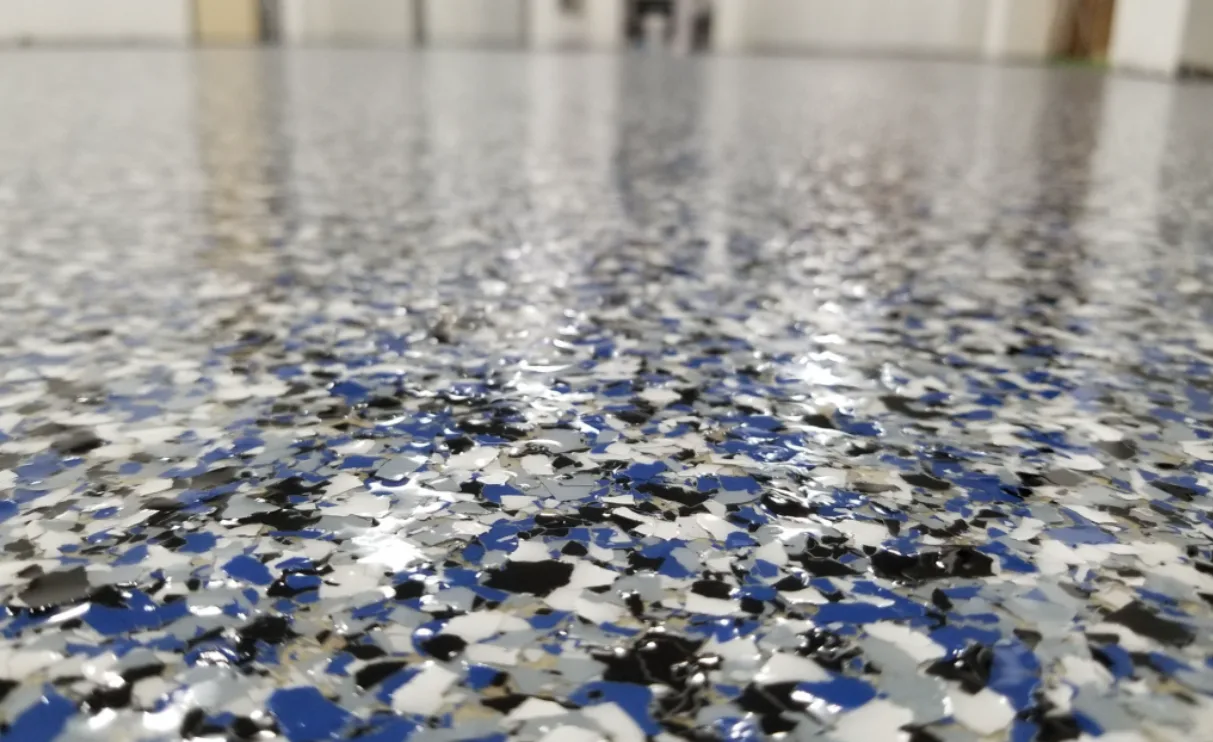
A coated floor needs far less maintenance than a bare slab, which is most of the point. But there are two things people do to a new floor that genuinely shorten its life, and both of them are done with good intentions.
The routine
Weekly, or whenever it looks like it needs it. Sweep or dust mop. That is it. The reason this is the most important step has nothing to do with appearance: sand and salt crystals sitting on the surface are abrasive, and every car that drives over them grinds them into the topcoat. Removing grit is the single most effective thing you can do for the finish.
Every month or two. Mop with warm water and a small amount of a pH neutral cleaner. A microfibre flat mop is ideal. The floor is non porous, so nothing is soaking in and you are only lifting what is sitting on top.
As needed. Wipe spills when you notice them. Oil, brake fluid, antifreeze and road salt all come off a coated floor with a rag, which is the difference between this floor and bare concrete.
That is the whole routine. There is no annual sealing, no waxing, and no maintenance product you need to buy from us.
What to keep off it
Anything with a degreaser or a citrus solvent in it. Heavy duty garage degreasers are formulated to attack exactly the kind of chemistry that a resin topcoat is made of. They will dull the gloss, and used repeatedly they will soften the surface.
Vinegar and other acids. Household advice about vinegar comes from the world of tile and grout. On a resin floor it does nothing useful and gradually etches the finish.
Steel wool, wire brushes and abrasive pads. Obvious when written down, and we have seen it more than once on stubborn tire marks.
A pressure washer at close range indoors. It is not that the floor cannot take water. It is that a concentrated jet at the edges can find any weak spot and start lifting it.
Tire marks
The most common question we get after handover. Dark rubber transfer marks come from soft compound performance tires more than anything else, and they are surface deposits rather than damage.
Warm water, a neutral cleaner and a soft brush usually takes them off. If they are stubborn, a little more time soaking rather than a stronger chemical is the right answer.
Snow, salt and winter
Do nothing special. Let the car drip, then when the puddle has gone, sweep or mop the salt residue away. The coating is not being harmed by the salt sitting on it, but the crystals are abrasive underfoot and under tires, so getting them off is worth the two minutes.
Related
- How long a coating lasts and what shortens it
- Hot tire pickup, which is a different problem from tire marks
- What we install and why the topcoat behaves this way
Reference
Resin floor topcoats are chemically distinct from the concrete beneath them, which is why cleaning advice written for bare or sealed concrete does not transfer. Background on concrete surfaces and their treatment is published by the Portland Cement Association.