
Basements
Basement floor coating for New England slabs
Most basements in this part of the state sit on a slab poured decades ago, often without a vapor barrier under it. That changes what a coating has to do down there, and it is why a garage system applied without testing will fail in a basement.
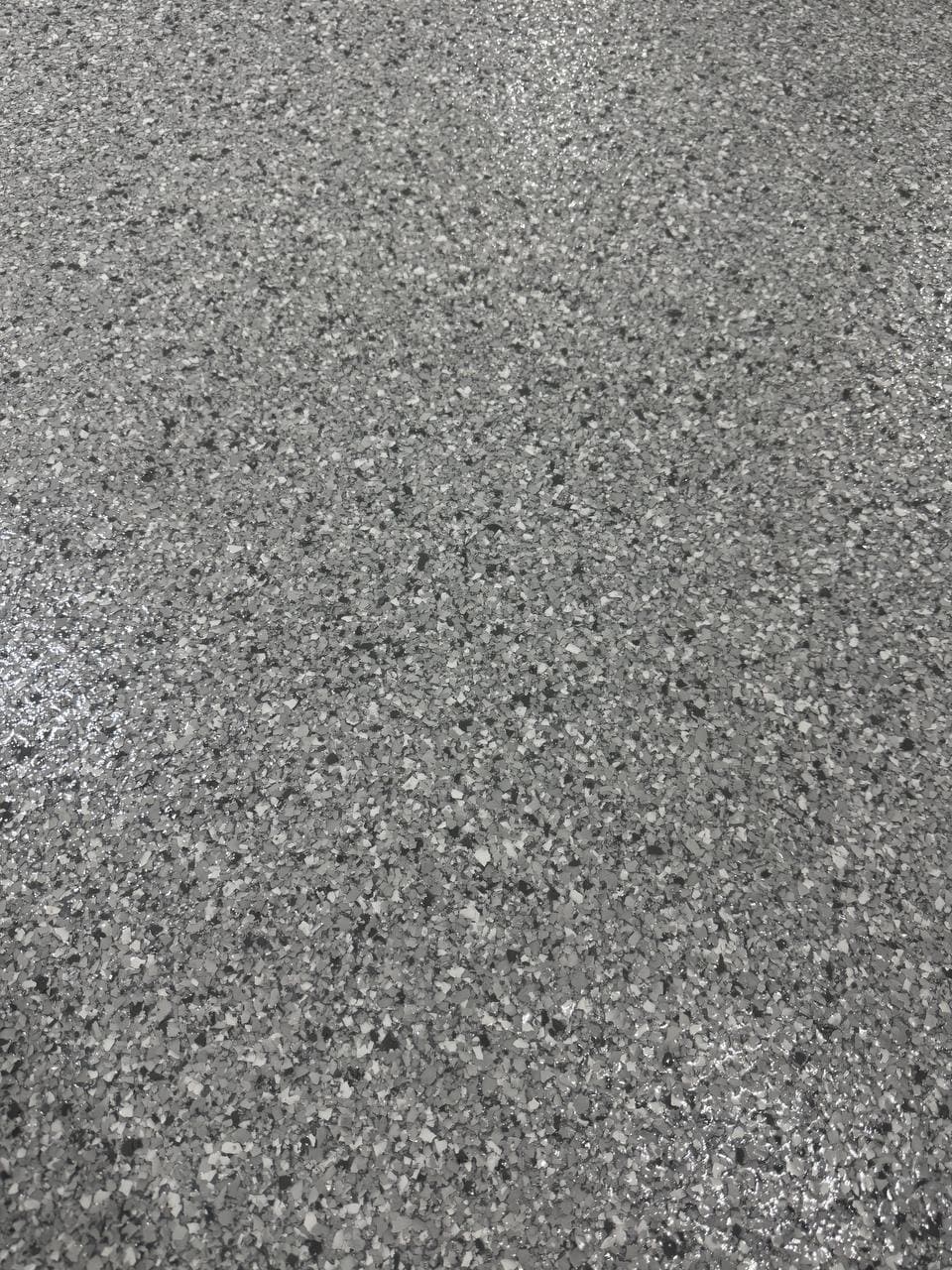
Why basement floors fail more often than garage floors
The problem is almost never the product. It is water vapor coming up through the slab from the ground below. If the slab has no vapor barrier under it, moisture drives upward continuously and pushes any sealed coating off from underneath.
This is why we test before we quote a basement rather than after. A calcium chloride or relative humidity test tells us what the slab is doing, and the answer changes the system we price.
- Vapor driveMoisture pushing up from the ground lifts coatings that were never tested for it
- Old paintLayers of floor paint from previous decades have to come off entirely
- EfflorescenceWhite powder on the slab means water is moving through it
- Cold joints and cracksCommon on old pours and a direct path for water
| First step | Moisture test before the price is written |
|---|---|
| System | Moisture tolerant primer where needed, then the standard flake build |
| Prep | Diamond grind, full removal of old paint and sealers |
| Install time | One day for most basements |
| Finish | Seamless, no grout lines, nothing for water to get under |
| Warranty | 15 years, written |
| Price | $7 to $10 per square foot installed |
A coated basement is not the same as a finished basement
You are not putting down a floating floor that has to be pulled up after a water heater lets go. A coated slab is the slab. If water comes in it dries and you carry on.
That makes it a better answer than laminate or carpet tile for a basement that is used as a gym, a workshop, a laundry or storage, which covers most of the basements we see.
What we do about the moisture
If the test comes back within range, the standard build goes down. If it comes back high, the floor gets a moisture tolerant primer first, and that shows up as a line item on the quote rather than a surprise later.
If the slab is actively wet, coating it is the wrong move and we say so. Fixing the drainage comes first, and we would rather lose the job than warranty a floor over standing water.
Questions we get about this one.
My basement gets damp. Can you still coat it?
Usually yes, but the moisture test decides the system. Damp air is a different problem from water moving up through the slab, and the test tells us which one you have.
There is old paint on the floor. Does it have to come off?
Yes, all of it. We grind it off as part of the prep. Coating over old floor paint means your new floor is only as attached as that paint was.
Will it feel cold?
It is a coated concrete slab, so it reads the same temperature as the concrete under it. It is no colder than tile and it takes a rug the same way.
Can you do the stairs too?
Yes. Stair treads and a cove base at the wall are both common additions on basement jobs.
Other floors we do
- Garage floorsA garage slab in this valley takes more abuse than any other concrete on the property.
- Patios and walkwaysExterior concrete has two jobs a garage floor does not: it has to survive full sun without changing color, and it has to stay grippy when it is wet.
- Pool decksA pool deck has to be safe with bare wet feet on it, comfortable in full sun, and able to shrug off chlorine and salt.
- Commercial and industrialOn a commercial floor the specification matters more than the color, and downtime usually matters most of all.
Send a photo of your floor.
You get a real number back, not a range and not a starting at.
$7 to $10 per square foot installed · 15 year written warranty