
A pool deck in Florida has one job: survive sun, chlorine and bare feet. A pool deck in Massachusetts has that job for two months and a completely different one for four, when it is under snow and cycling through the freezing point every night.
That second job is what most pool deck products are not designed for.
What the winter does
Water gets into the surface of the concrete, freezes overnight, expands by about nine percent, and pushes outward. Repeat that forty or so times a season and the top of the slab starts coming away in flakes. Around a pool you get the added problem of the deck being wet more often than most exterior concrete, so there is more water in it to freeze.
Damage concentrates at the edges and the steps first, because those have the most exposed surface relative to their mass.
What the summer does
Sun. Anything epoxy based ambers. A yellowed pool deck looks considerably worse than plain grey concrete, and it happens in a season or two. This is the single strongest reason polyaspartic is the right chemistry outdoors: it is aliphatic and it does not do this.
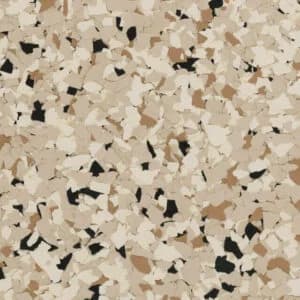
Heat underfoot. Dark, dense surfaces get genuinely uncomfortable in August. Blend choice is a comfort decision here, not just an aesthetic one, and lighter blends stay noticeably cooler.
Chlorine and salt systems. Both attack untreated concrete slowly at the surface. A sealed deck simply stops that contact.
What the coating has to do
- Stay flexible through freeze and thaw rather than shearing off a moving slab
- Resist UV without yellowing
- Hold an aggressive enough texture to be safe with wet bare feet
- Terminate cleanly against coping and tile
- Still be cleanable, because sunscreen and leaf tannin both stain
A textured polyaspartic build does all five. We put an anti slip additive in the final coat on every exterior job as standard rather than as an upgrade, because a smooth pool deck is a genuine hazard rather than a preference.
Resurfacing rather than replacing
A deck that is cracked, pitted and scaled but structurally sound does not need to come out. Tearing out and repouring costs multiples of a coating and gives you a slab that will do the same thing again in ten years.
What a coating cannot fix is a deck that has heaved or settled, where sections sit at different heights. That is a base problem and we will tell you so at the quote rather than take the job.
When to book it
March through November. Exterior work needs a dry slab and a dry forecast, which is the real constraint rather than air temperature.
The practical advice is to book in late winter for a spring slot. By June everybody has remembered their deck at the same time.
Related
- What we do on pool decks
- Patios and walkways, which share most of the same constraints
- Why polyaspartic outdoors, specifically the UV point
Reference
Freeze thaw and deicer scaling on exterior concrete is described in the Pennsylvania Aggregates and Concrete Association technical sheet on scaling.