
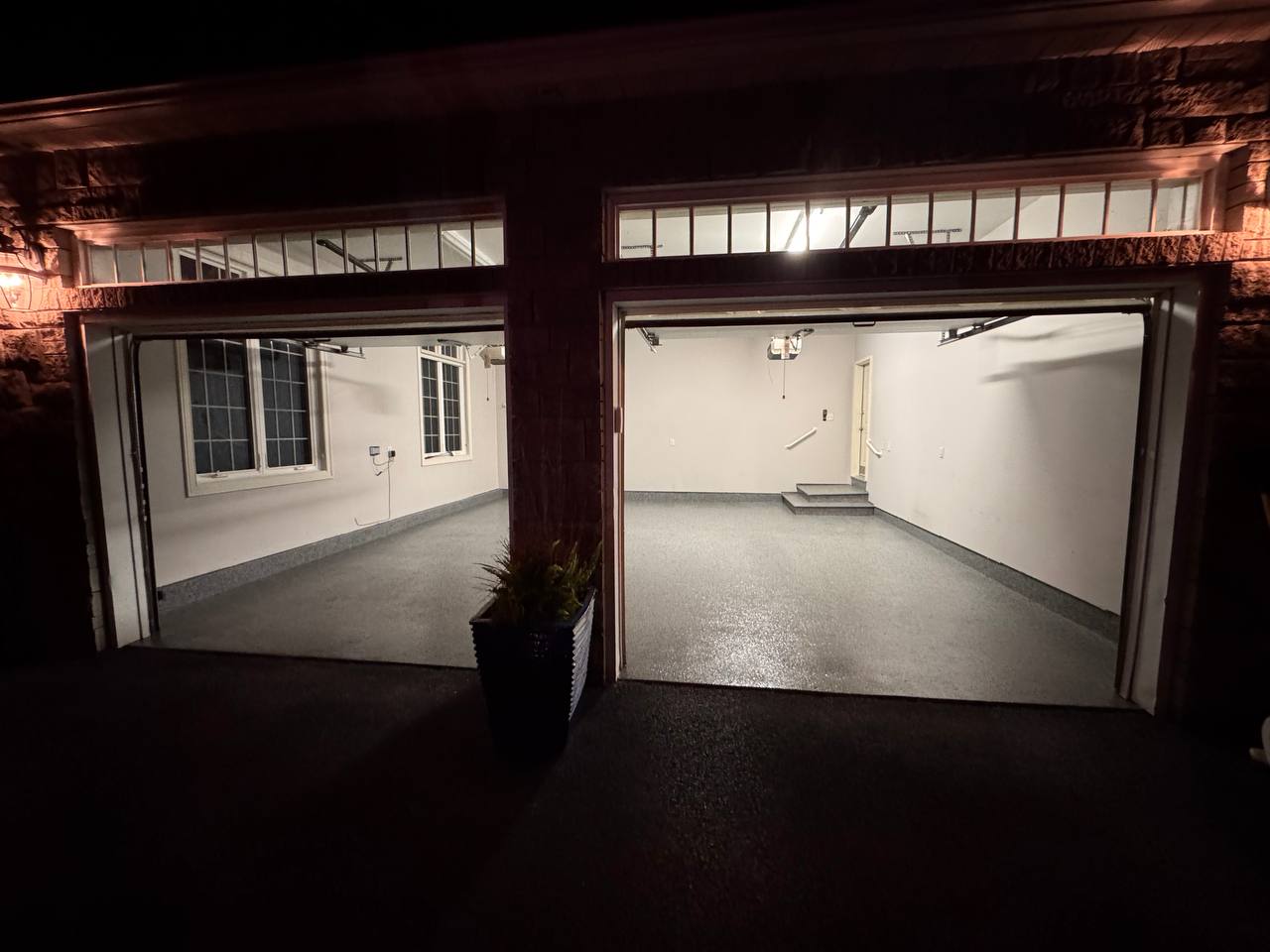
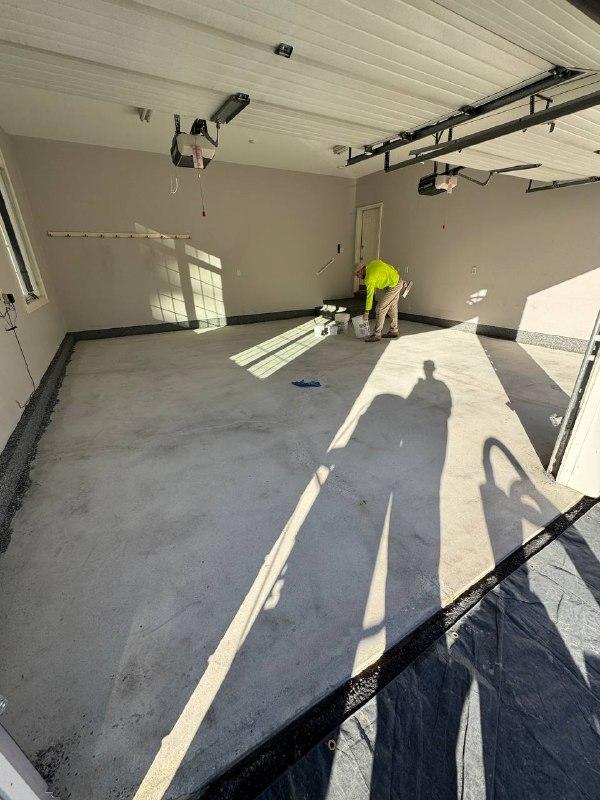
A two bay garage behind a brick house. The slab had been painted at some point, in the gray that every hardware store sells for the purpose, and the paint had done what floor paint does: worn through to concrete where the tires run and lifted at the edges where nothing ran at all. These are the photographs the crew took on that job, in the order they took them. Nothing here is staged and nothing is stock.
What we started with
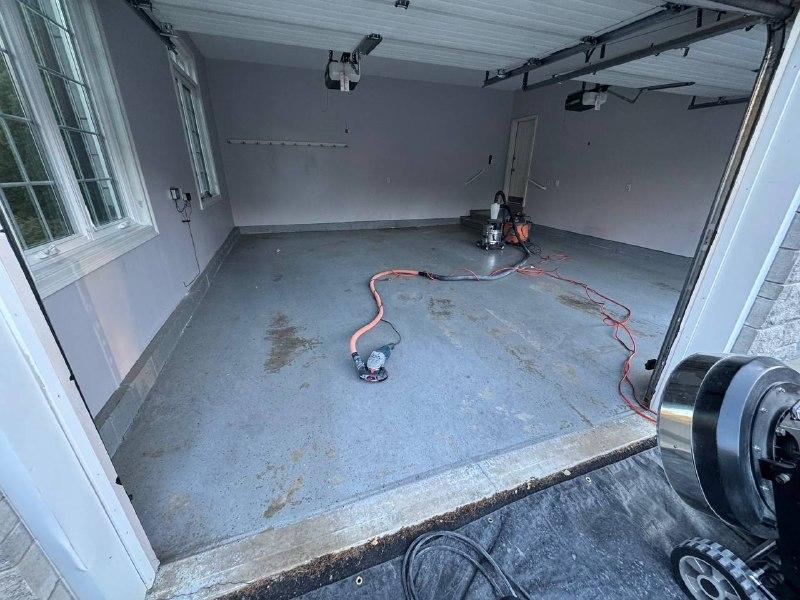
Nothing goes over this. Not a primer, not a thicker coat, not a product that claims to bond to anything. A new floor on top of old paint is attached to the slab exactly as well as the paint is, and the paint was coming off on its own.
Ground back to concrete
Diamonds take the paint and the top of the cement paste off together, under a vacuum, until the slab is sound concrete with the sand showing. That is the surface a coating can key into, and it is the one hour of the day that decides whether the floor is still down in ten years. We have written about why that hour cannot be an acid wash and about what happens when it is skipped.
The floor that went down
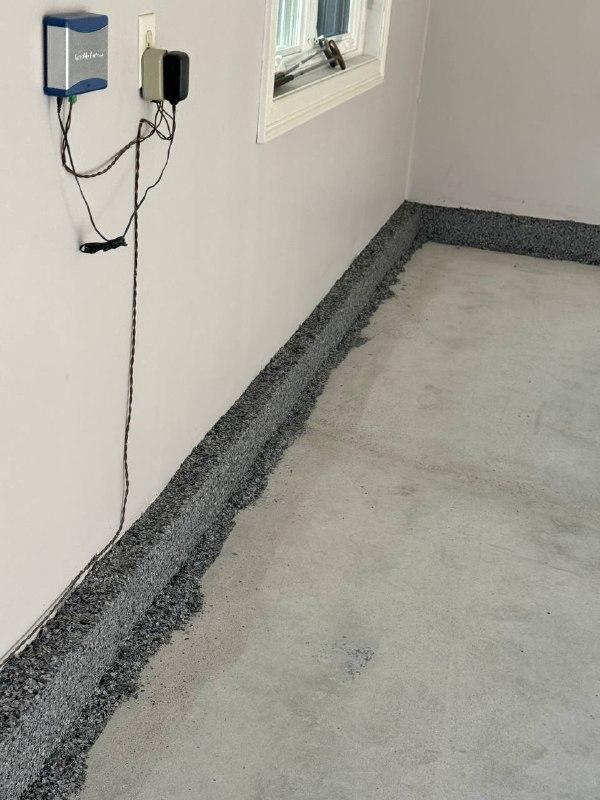
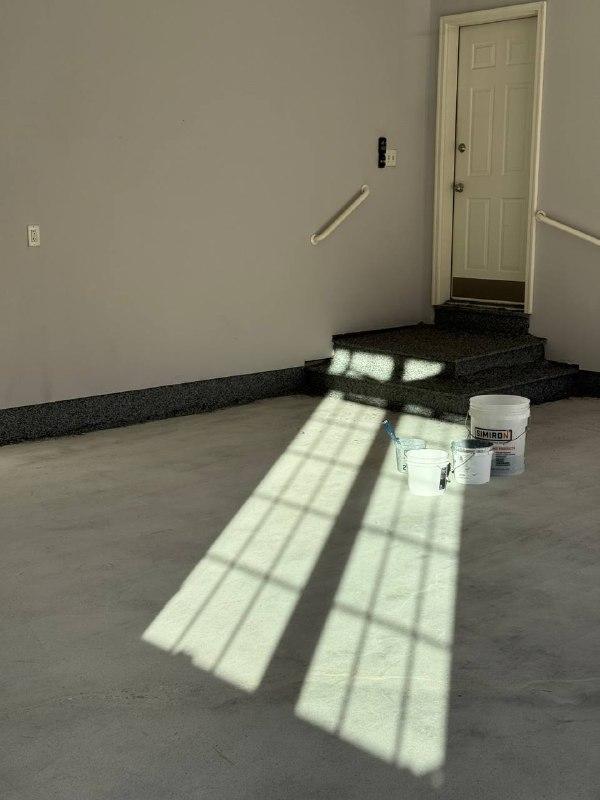
A polyurea basecoat across the open concrete, vinyl flake broadcast into it until the floor will not take any more, and two polyaspartic topcoats over that. The same five layers go on every floor we install; the flake floor page has the build in detail. The blend on this one is a dark blue gray with black in it, chosen because the garage is used as a garage and a dark blend hides what a garage drops on it.
The coating was carried up the wall as a cove and over the steps to the house door, so there is no corner at the base of the wall for salt water and grit to collect in, and the steps wear the same way the floor does.
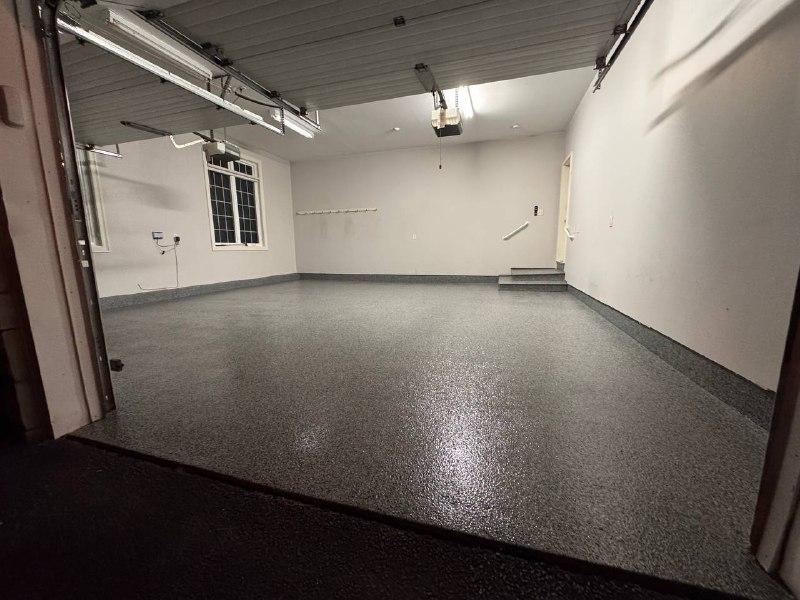
The finished photographs were taken after dark, from the driveway, with both doors up and the lights on. That is the one at the top of this page.
Related
- Grinding vs acid etching concrete, why the ground slab looks the way it does
- Cove base, stair treads and where the floor stops, the detail along the wall
- What install day actually looks like, a different job with the crew in frame
- How we install a floor, step by step