Skip to content

GC Gorilla Coatings · Westfield MA

Before and after: a cracked single bay, repaired and coated

November 12, 20264 minute readGC Gorilla Coatings, Westfield MA

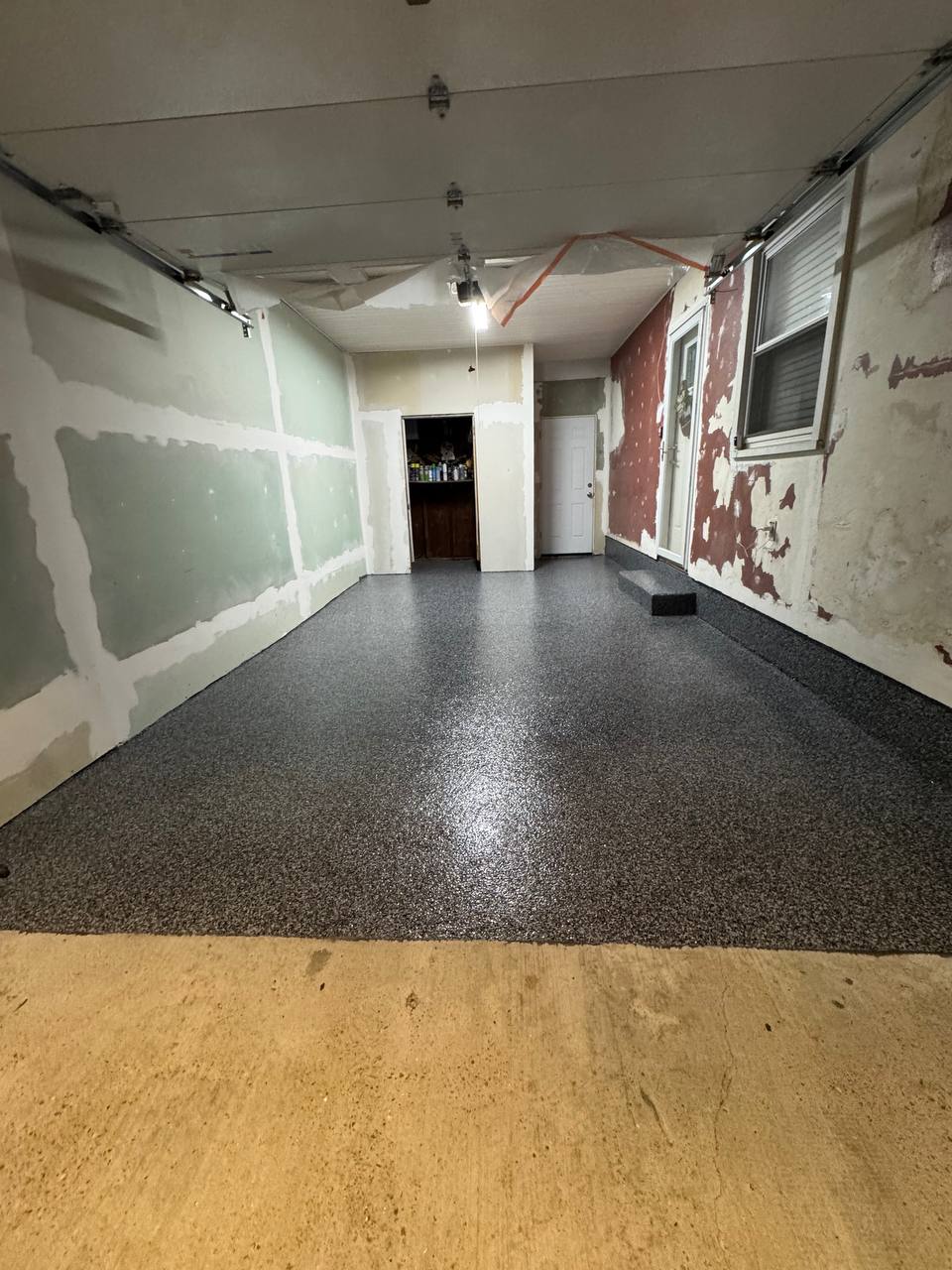
A single bay garage with a finished dark flake floor, light off the topcoat

A single bay garage, long and narrow, with the walls in the middle of being redone. The walls are not our work and they are not finished. The floor is the part we did, and the crew photographed it at five stages, which is four more than most jobs get.

What we started with
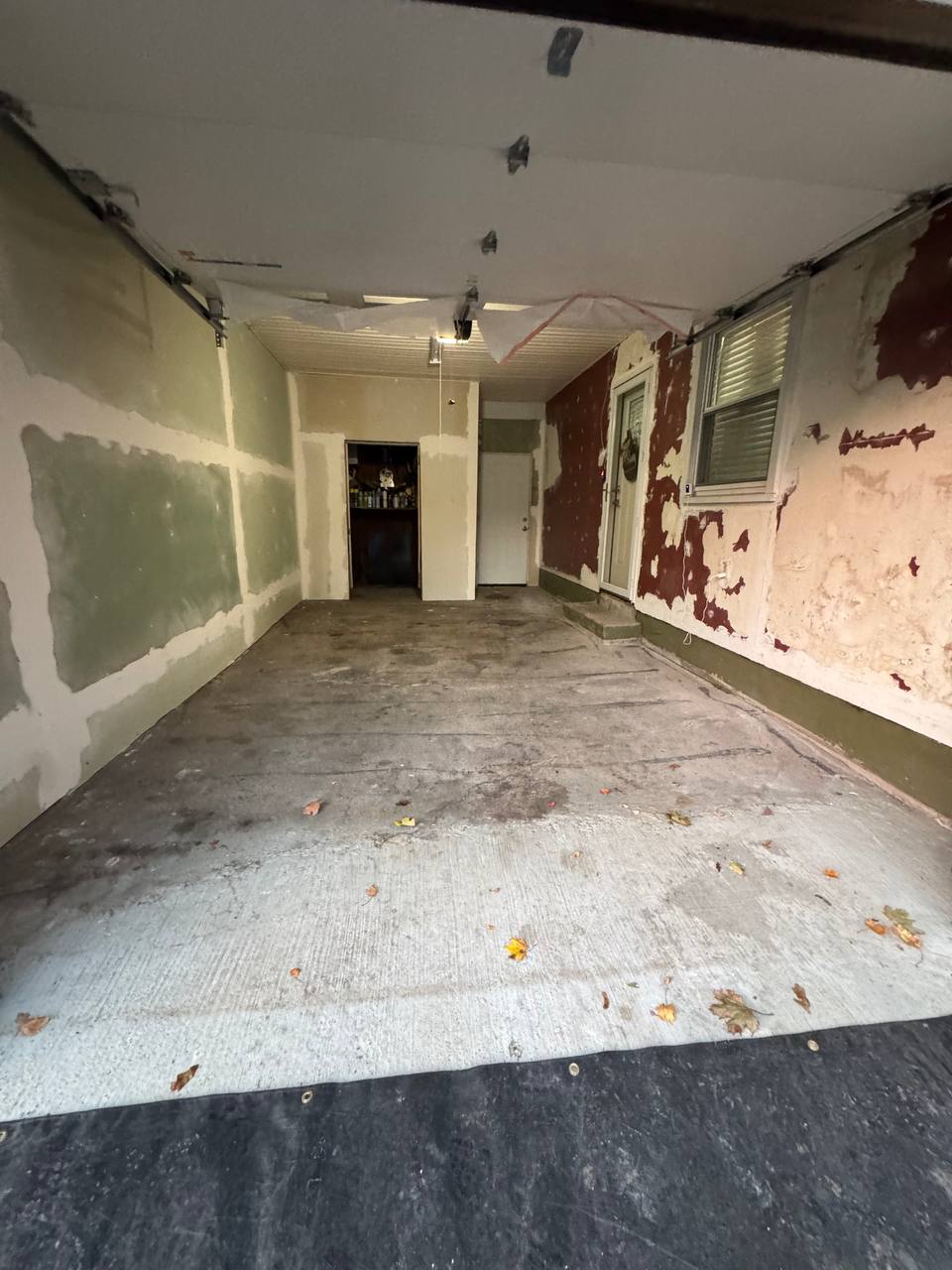
A single bay garage seen from the door: a stained concrete slab, darker toward the back, with a rough pale section across the entrance
From the door, before anything was touched. Stained through the middle, and a rougher, paler section across the entrance where the slab had broken up.

Nothing in that photograph says whether the slab can be coated. Staining is cosmetic. What decides it is underneath the dirt, and you only see that once the grinder has been over the floor.

Cracks first

With the surface open, the cracks showed: a grid of them across the middle of the slab. Each one was chased out and filled.
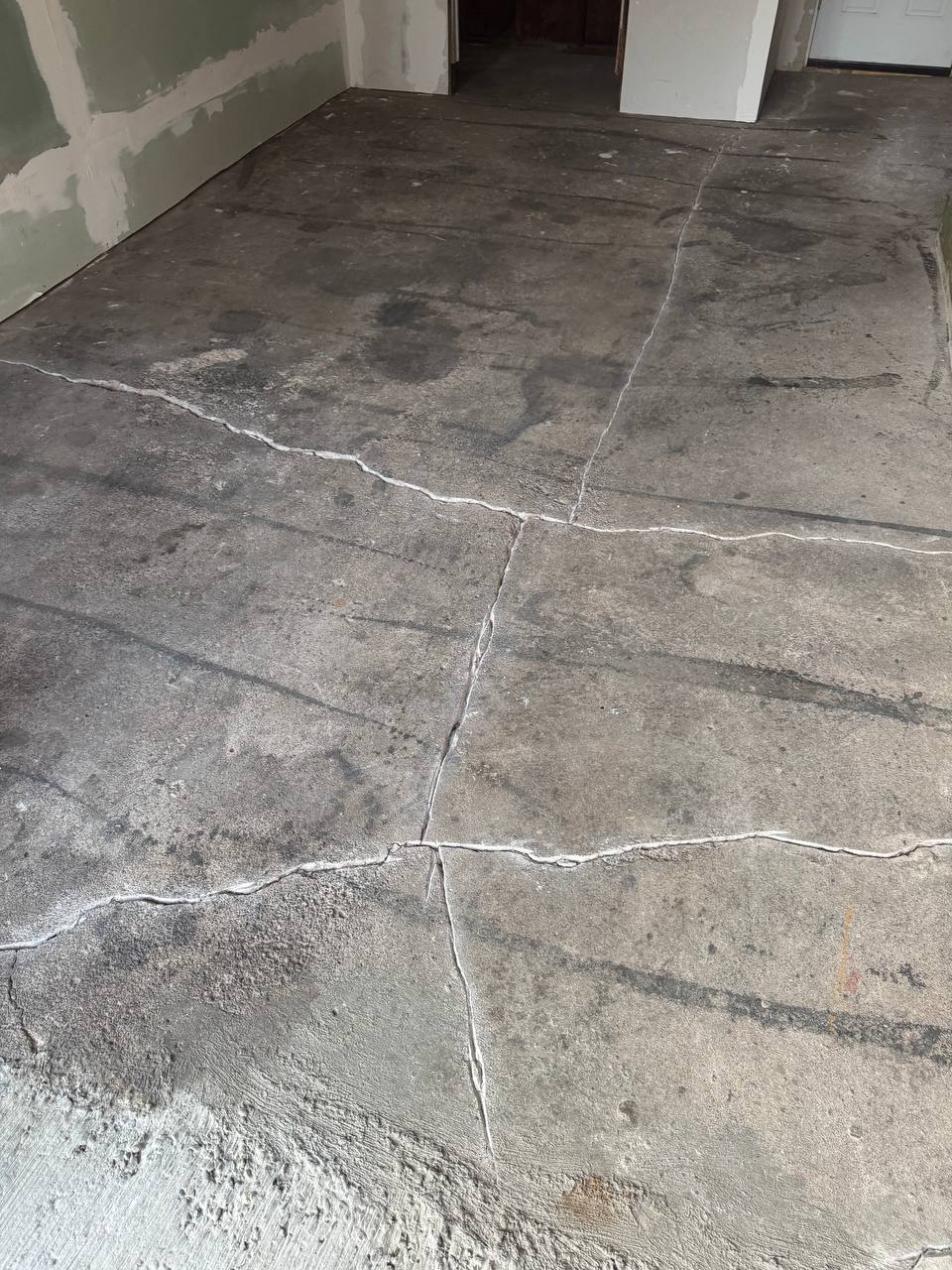
A ground garage slab with a grid of cracks, each one filled with a pale bead of repair material
Every crack opened up and filled. The filler stands proud at this stage. It gets ground flat before anything else goes down, or it shows as a ridge in the finished floor forever.
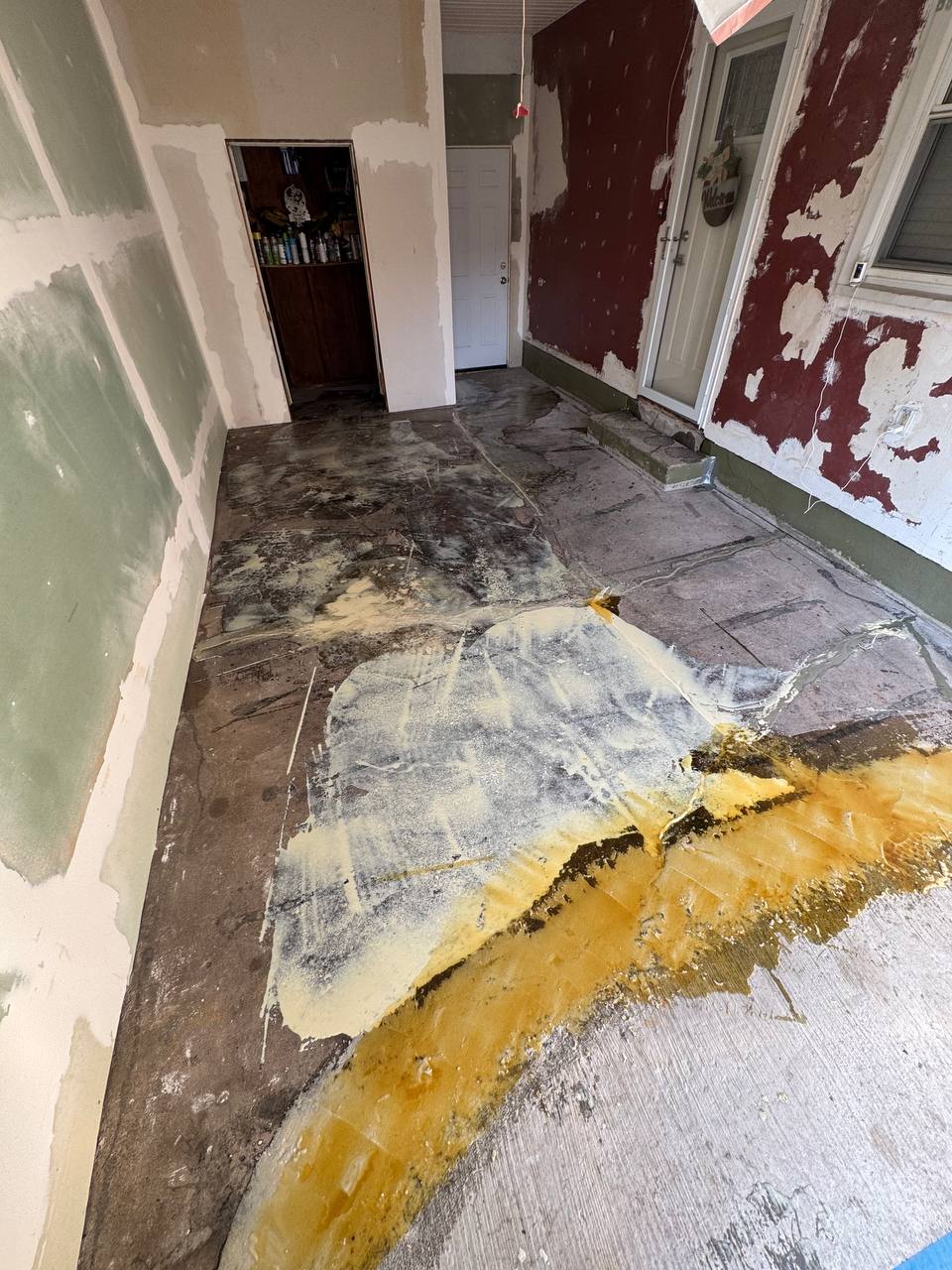
Repair material trowelled across a broken section of slab at the garage door, with filled cracks running back into the garage
The worst section, at the door, rebuilt rather than skimmed. The thin lines running back from it are the filled cracks.

This is the least photogenic stage of any job and the one that takes the time. A crack filled without being opened is a crack painted over. A broken section coated without being rebuilt is a low spot that collects water for as long as the floor lasts. We have written out which damage is repairable and which is not; this slab got coated, which tells you which side of that line it was on.

Flake down
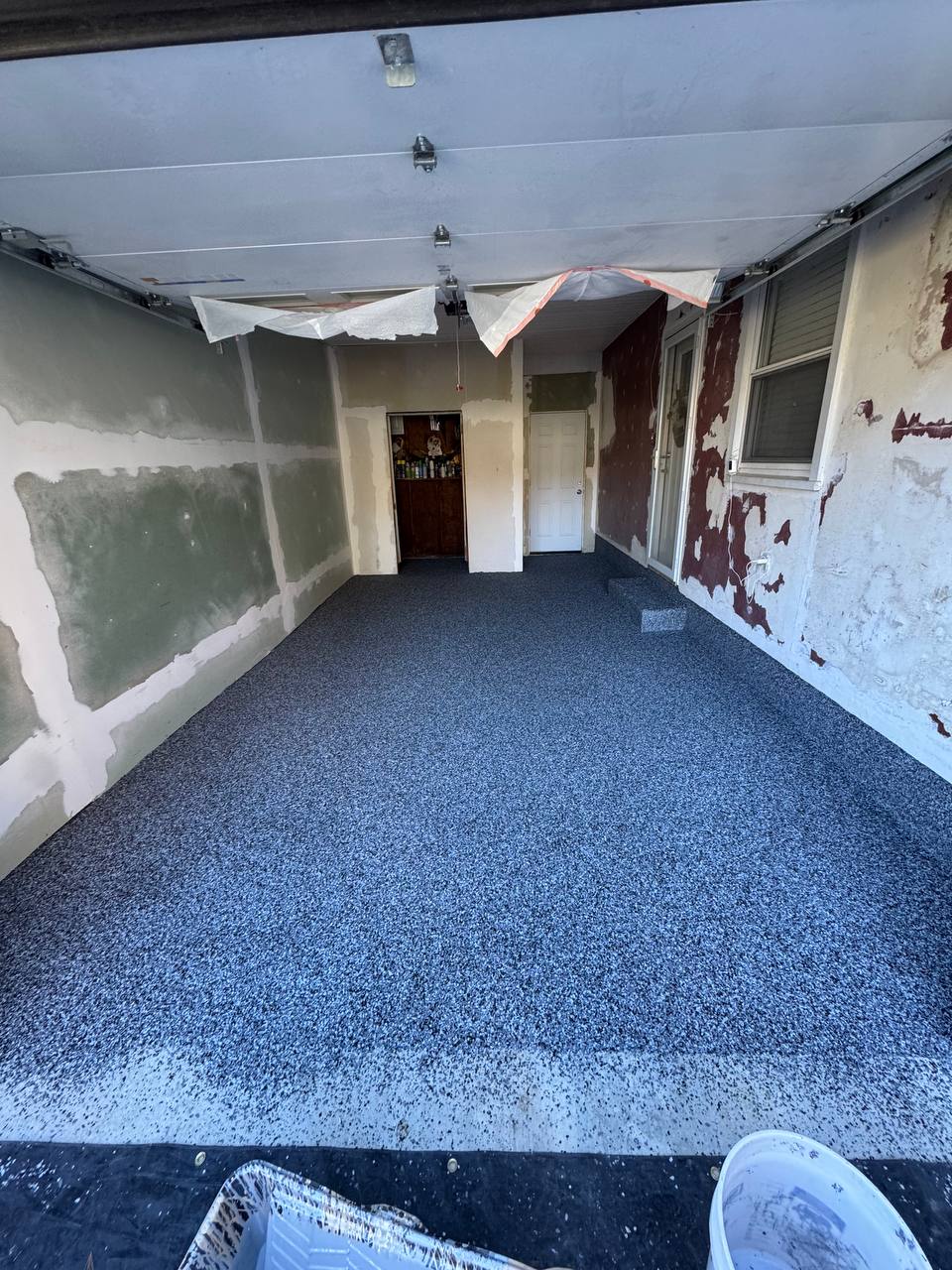
The same garage from the door with dark flake broadcast across the whole floor and loose flake scattered on the threshold
Flake broadcast into the basecoat until the floor will not take any more. It is matte at this point, and the loose flake on the threshold has not been cleared yet.
The finished floor after dark: a dark flake surface with light reflecting off the topcoat
Finished, after dark. The gloss is the topcoat. The cracks and the rebuilt section are under there, and you cannot find them.

That last point is the practical argument for a full flake floor over a solid colour on a slab like this one. A solid colour shows every repair as a faint change in the surface. Flake at full refusal is visual noise from wall to wall, and it hides what is underneath it.

The step
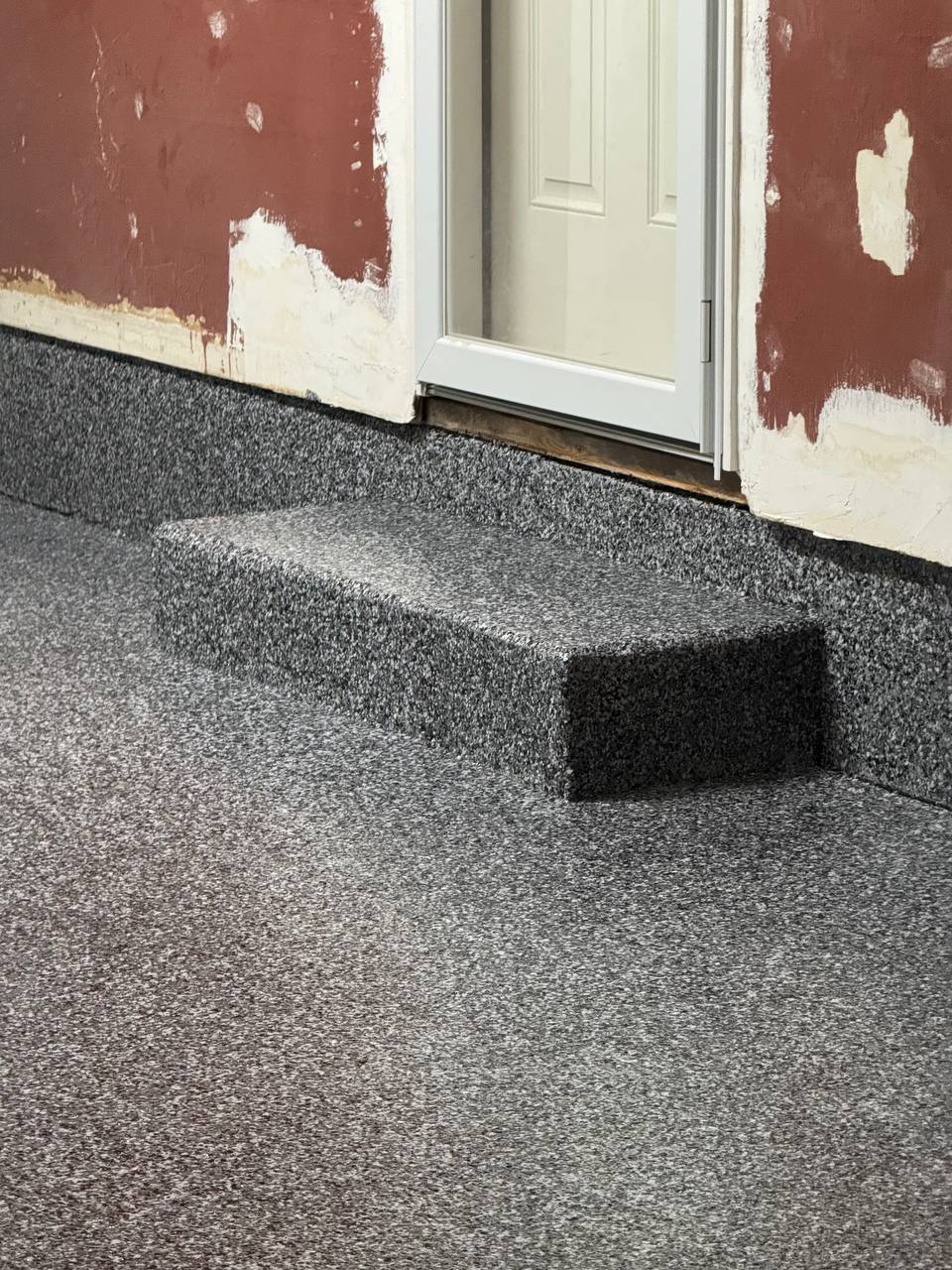
A concrete step at a house door coated in flake on the tread and the sides, with the coating carried up the wall behind it
The step at the house door, coated on the tread and the sides, with the cove running along the wall behind it. All of it is hand work.

A step left bare next to a coated floor looks like the job stopped early. It also stays the one piece of open concrete in the room, taking on salt water every winter.

Related

Reference

Crack treatment and patching ahead of a coating sit under the same substrate preparation guidance as the grinding itself: Guideline 310.2R from the International Concrete Repair Institute.

Tell us about your floor.

You get a real number back, not a range and not a starting at.

From $7 per square foot installed · 15 year written warranty

33 George St, Westfield, MA 01085