
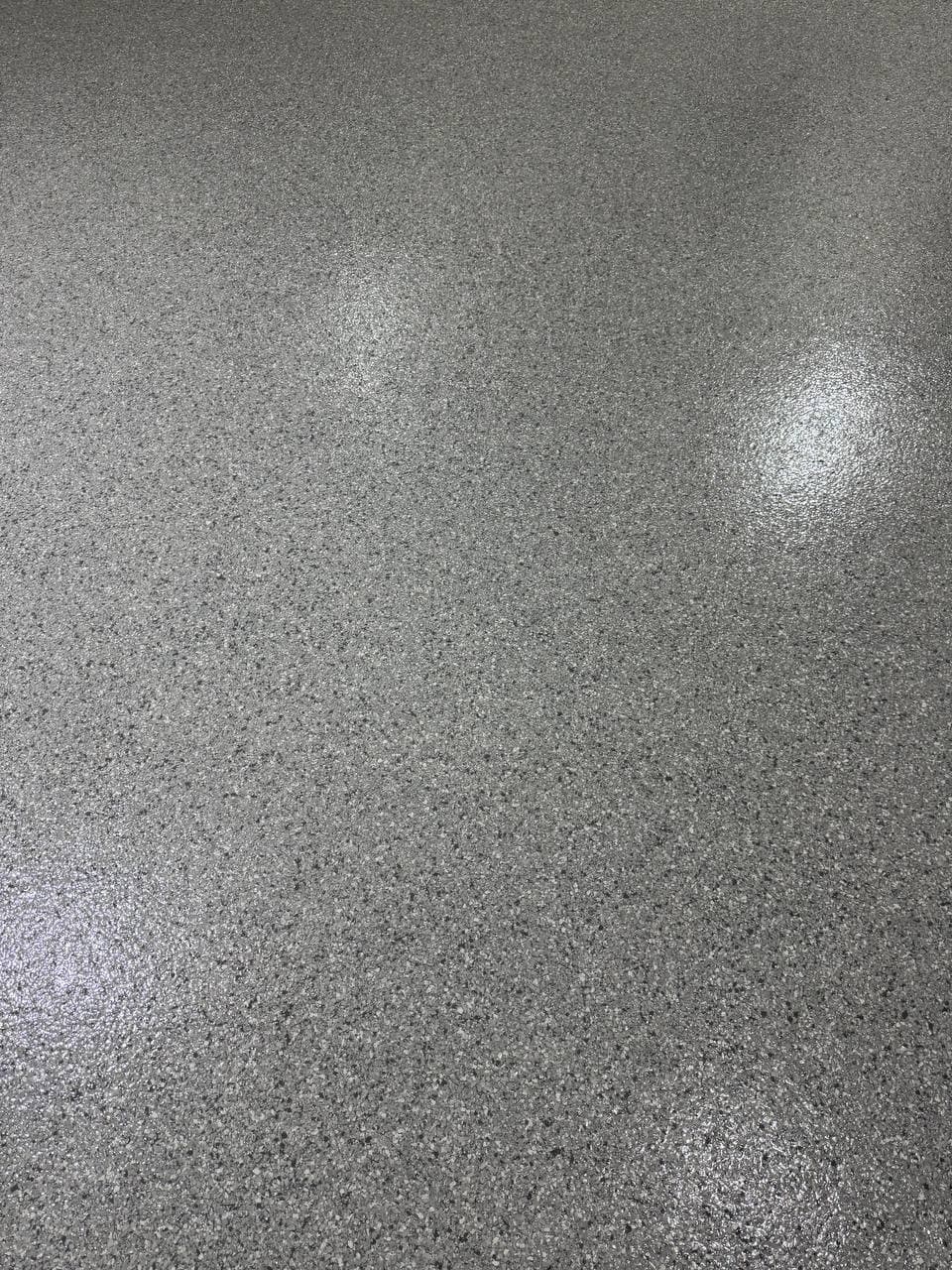
Three products get called the same thing in conversation and they are not interchangeable. They cost different amounts, last different lengths of time, and solve different problems. Buying the wrong one is the most common way people waste money on a concrete floor.
Penetrating sealer
A thin liquid, usually silane or siloxane based, that soaks into the top few millimetres of concrete and reacts inside it. It leaves no film. The floor looks almost exactly as it did before, just slightly darker while it is wet.
What it does: reduces water absorption, which slows freeze thaw damage and salt penetration.
What it does not do: change the appearance, cover damage, stop dusting, resist oil, or give you a cleanable surface. It is invisible protection for concrete you are happy with.
Lifespan: a few years, then reapply.
Where it belongs: a sound driveway or a newer exterior slab you want to protect. Cheap, sensible, unglamorous.
Film forming sealer
An acrylic or urethane that sits on the surface as a thin film, usually to add sheen to decorative or stamped concrete.
What it does: wets the colour, adds gloss, gives modest protection.
What it does not do: last. A thin film on a trafficked floor wears through, and it goes cloudy where water gets underneath it.
Lifespan: one to three years outdoors.
Where it belongs: decorative concrete where the look is the point and reapplication is expected.
A coating system
A build of several coats measured in mils rather than microns, bonded into a mechanically ground slab. In our case a polyurea basecoat, a full flake broadcast, and two polyaspartic topcoats totalling 30 to 40 mils.
What it does: becomes the wearing surface. Waterproof, cleanable, chemical resistant, hides the condition of the concrete underneath, and stops salt and water reaching the slab entirely.
What it does not do: come cheap, or go over a slab that is moving.
Lifespan: measured in decades when the preparation was done properly.
The distinction that matters
A sealer slows down what is attacking your concrete. A coating stops it and gives you a different floor.
If your garage slab is sound, clean and you simply want to reduce salt absorption, a penetrating sealer is a rational hundred dollar decision and we will say so.
If the slab is already pitting, dusting, stained, or you want a floor you can actually mop, no sealer is going to deliver that. Sealing a spalling slab seals the top of a layer that is already coming away.
The overlap where people get it wrong
The commonest mistake is buying a film forming sealer for a garage floor expecting coating performance. It goes down easily, looks glossy for a season, then wears through in the wheel tracks and goes cloudy at the door where meltwater sits.
The second commonest is applying a penetrating sealer to concrete that is already spalling and expecting it to stop. It cannot. The damage mechanism is already inside the slab.
Related
- What our coating system is made of, layer by layer
- What road salt does to unprotected concrete
- What can still be coated if the damage has started
Reference
For the underlying behaviour of concrete, water absorption and durability, the Portland Cement Association publishes the technical background these products are designed against.