
Bare concrete does not resist oil. It absorbs it. That is the fact that decides everything else about a service bay floor, and it is worth being precise about what happens.
What oil actually does to a slab
Concrete is porous. Motor oil, gear oil and hydraulic fluid are low viscosity and they wick into that pore structure and stay there. Degreaser lifts what is on the surface and leaves everything below it.
Two consequences follow.
Cosmetic. The stain is permanent. Every bay ends up with a dark patch where the lift is, and no amount of scrubbing changes it.
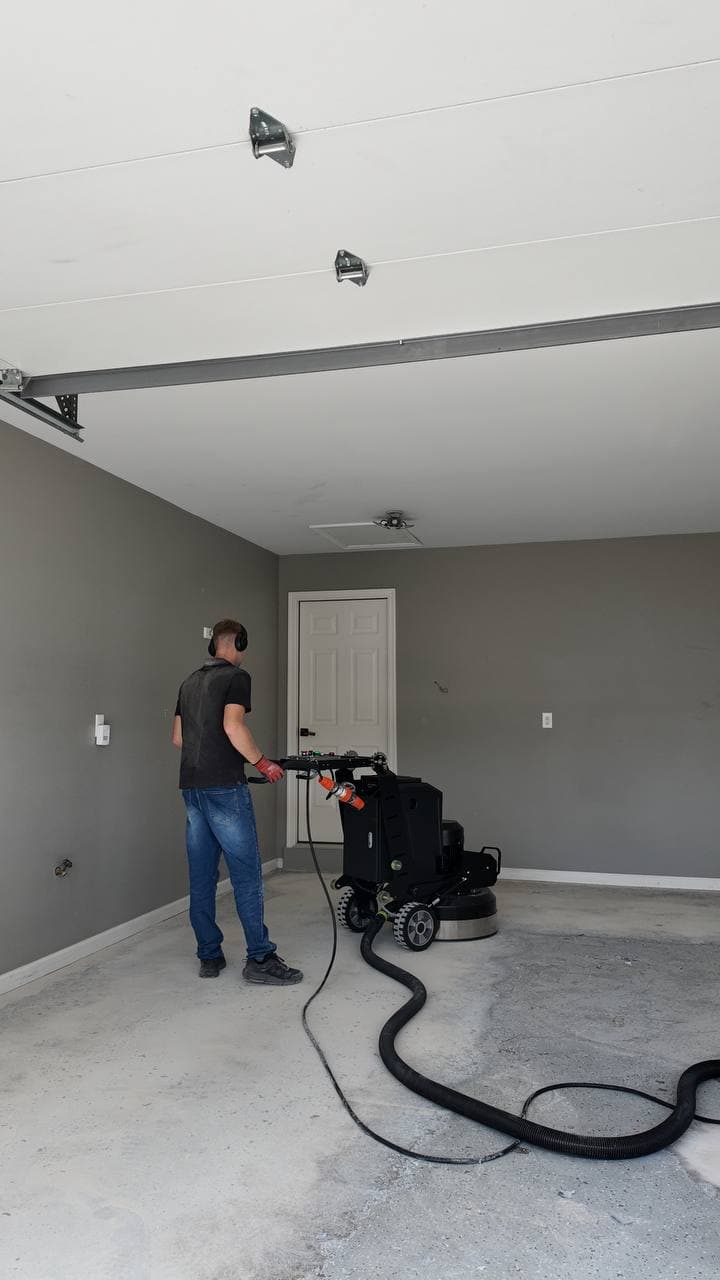
Practical, and worse. Contaminated concrete will not bond to anything. If you later want to coat that floor, the oil soaked areas have to be ground out to clean concrete or the coating will fail exactly there. That grinding is the expensive part of coating a shop that has been running uncoated for years.
Brake fluid is its own problem. It is a solvent as much as a fluid and it attacks a good many coatings, not just the concrete.
What chemical resistance means on a data sheet
Manufacturers publish resistance tables listing chemicals against exposure conditions. Two things get missed when people read them.
Duration matters more than the chemical. Almost any system tolerates a splash wiped up in ten minutes. The tables that matter describe immersion or prolonged contact, which is what a puddle under a leaking transmission actually is.
Resistance is not the same as immunity. A rating means the surface is not damaged under those specific conditions, not that anything can sit on it forever.
For a service bay, the realistic exposure list is motor oil, gear oil, hydraulic fluid, coolant, brake fluid, battery acid and gasoline, all at ambient temperature, some for hours.
What a shop floor actually needs
Chemical resistance across that list, specified rather than assumed.
Impact and point load tolerance. Lift bases, jack stands and dropped tools concentrate more load than any vehicle. This favours a heavier build than a residential garage gets.
Texture that works with fluid on the floor. A shop floor gets slippery in a way a home garage does not, and that is a safety question rather than a preference.
Cleanability. The entire point. A sealed floor means a spill is a rag and two minutes rather than a permanent mark.
A finish that reflects light. Bays are dark. A lighter floor genuinely improves how well people can see what they are working on.
Showroom and bays are different jobs
They usually sit thirty feet apart and they want opposite things. Bays want texture, chemical resistance and build thickness. Showrooms want depth of gloss and a finish that makes the cars look expensive.
Specifying one system for both is a compromise in both directions. We scope them separately.
Doing it without closing
Bay by bay, over nights or weekends. Polyaspartic cures fast enough that a bay coated on Saturday is working on Monday, which is the reason it gets specified commercially despite costing more per gallon.
Related
Reference
Contaminated concrete has to be prepared back to sound, clean substrate before coating. Assessment and preparation of contaminated slabs is covered in the surface preparation guidance published by the International Concrete Repair Institute.