
There is a can of epoxy floor paint at every hardware store in the valley for well under a hundred dollars. It says garage and basement on the label. In a New England basement it usually has a life measured in seasons.
The reason is not the quality of what is in the can. It is that the can does not know anything about your slab.
Vapor drive, which nothing on the label mentions
Most basement slabs in this part of Massachusetts were poured before vapor barriers were standard practice, which means there is nothing between the concrete and the wet ground underneath it.
Water in that ground does not stay there. It moves upward through the slab as vapor, continuously, driven by the difference in humidity between the soil and your basement. On a bare slab this is invisible: the vapor reaches the surface and evaporates into the room.
Seal the surface and it has nowhere to go. Pressure builds under the coating until it pushes it off from below. The coating comes away in sheets with a chalky white residue on the back, and the floor underneath looks perfectly fine, which is what makes it confusing.
This is why a basement should be moisture tested before anyone quotes it. Not after.
How the test works
Two standard methods. A calcium chloride test measures how much moisture comes out of the slab over a set period. A relative humidity probe drilled into the concrete measures what is happening inside it, which is the better number.
Either one takes a day or two of sitting on the floor and it tells you whether a standard build will hold or whether the floor needs a moisture tolerant primer underneath first.
We do this before writing the price, so if a primer is needed it appears as a line item rather than as a surprise or as a warranty claim.
The other thing about basement floors
Old paint. Almost every basement we look at has at least one layer of floor paint on it from a previous decade, sometimes three.
All of it has to come off. Not scuffed, not sanded, removed. A new coating over old paint is only as attached as that paint is, and paint from the eighties applied to an unprepared slab is not attached to much.
That grinding is a real part of the labor on a basement job, and it is a large part of why a basement can price differently from a garage of identical size.
Why a coated slab beats the alternatives down there
The competition for a basement floor is usually laminate, carpet tile or vinyl plank.
All three sit on top of the slab, which means all three have a gap underneath, and everything about a New England basement wants to put water in that gap eventually. A water heater lets go, a heavy rain finds the old cold joint, the sump backs up once. Then the floor comes up and goes in a dumpster.
A coated slab is the slab. It gets wet, you push the water toward the drain, it dries, and you carry on. There are no seams and nothing for water to get under.
For the way most people actually use a basement in this area, which is a gym, a workshop, laundry and storage, that is the correct trade.
What the can does do well
Nothing here is an argument that a DIY kit is a scam. If you have a dry, sound slab in a room you are not precious about, and you want it to look better this weekend for under a hundred dollars, the can is a perfectly reasonable answer.
What it will not do is survive a slab with vapor coming through it, and it will not adhere over the paint that is already down there. Those are the two things that make basements different from garages, and they are exactly the two things the label does not discuss.
The honest version of when to call us
If your basement is dry, the slab is bare and sound, and you want it done cheaply, buy the can.
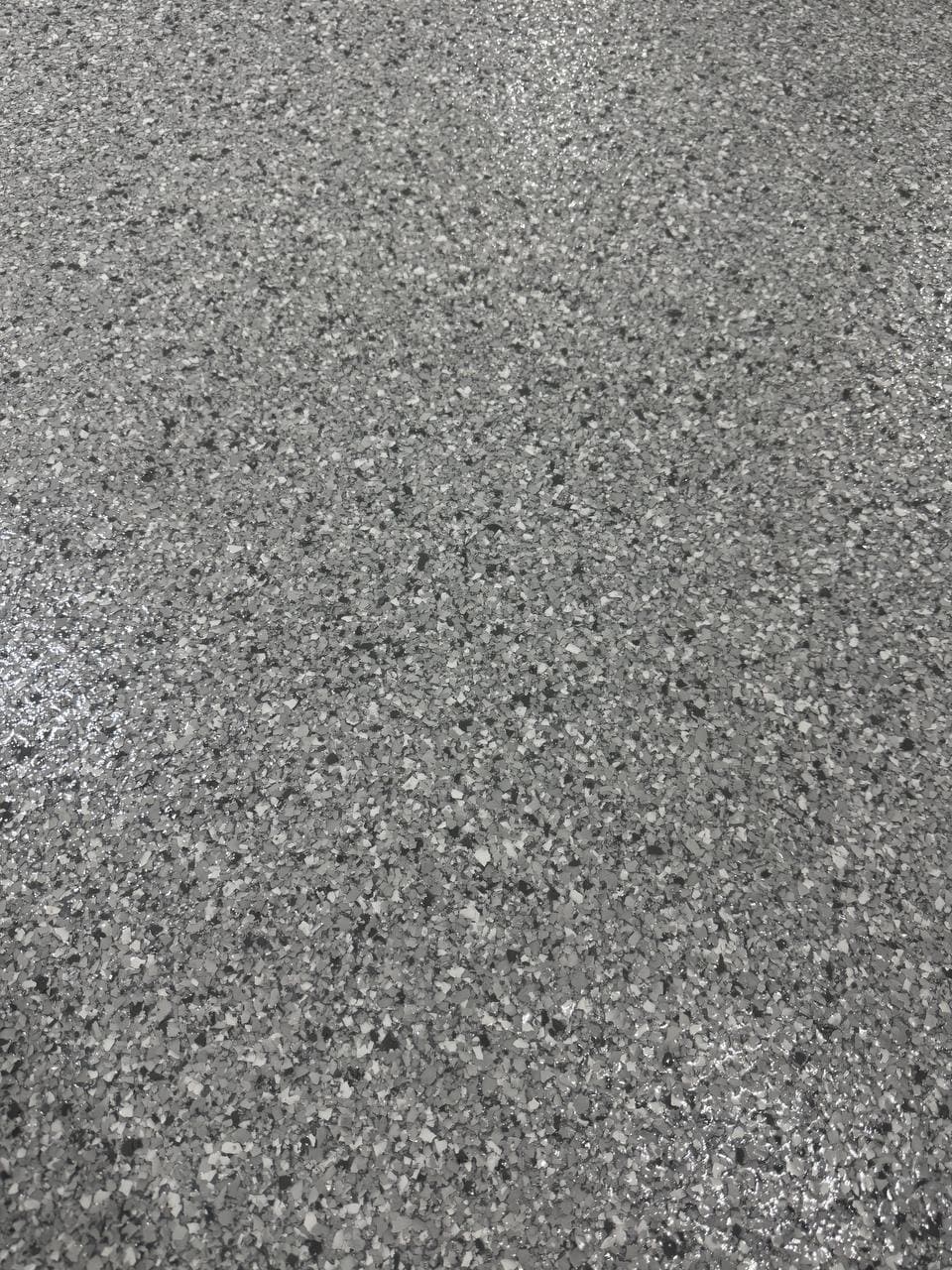
If there is old paint down, if you have ever seen white powdery efflorescence on the concrete, if the floor has been damp, or if you want it to still look like this in ten years, get it tested first. We will do the test and tell you what the slab is actually doing, including telling you when the answer is that it needs drainage work before it needs a floor.
Related
- What we do on a basement floor, including how the test changes the price
- Why coatings peel, which covers bonding in general
- Our pricing
Reference
Slab moisture is measured against published standards rather than by eye: ASTM F1869 for the calcium chloride vapor emission test, and ASTM F2170 for in situ relative humidity, which is now the preferred method for anything critical.