
There are four realistic ways to finish a basement floor in this part of the state, and they separate cleanly on one question: what happens when water arrives.
Not if. In a New England basement, over the life of the floor, water arrives. A water heater lets go, the sump backs up once, a heavy September rain finds the old cold joint.
Carpet tile
For it: warm, cheap, and individual tiles can be lifted and replaced.
Against it: it is carpet in a basement. It holds moisture, it holds smell, and a section that got wet is a section you are replacing. The backing traps damp against the slab.
Reasonable in a genuinely dry, above grade walkout. Poor anywhere else.
Luxury vinyl plank
For it: looks like wood, feels warm underfoot, goes down fast, and the planks themselves do not mind water.
Against it: the planks are fine and the gap underneath them is not. LVP floats over the slab, so anything that gets under it stays under it in the dark, and vapor coming up through an unsealed slab has nowhere to go. Cupping and mould under floating floors is a well known basement problem.
If you go this way, seal the slab first and use a proper underlayment. Most people do neither.
Engineered wood
For it: it is the nicest surface of the four.
Against it: it is wood in a basement. Even engineered product has a moisture tolerance, and a New England cellar tests it. Expensive to install and expensive to lose.
We would not put it below grade without a very good moisture number first.
A coated slab
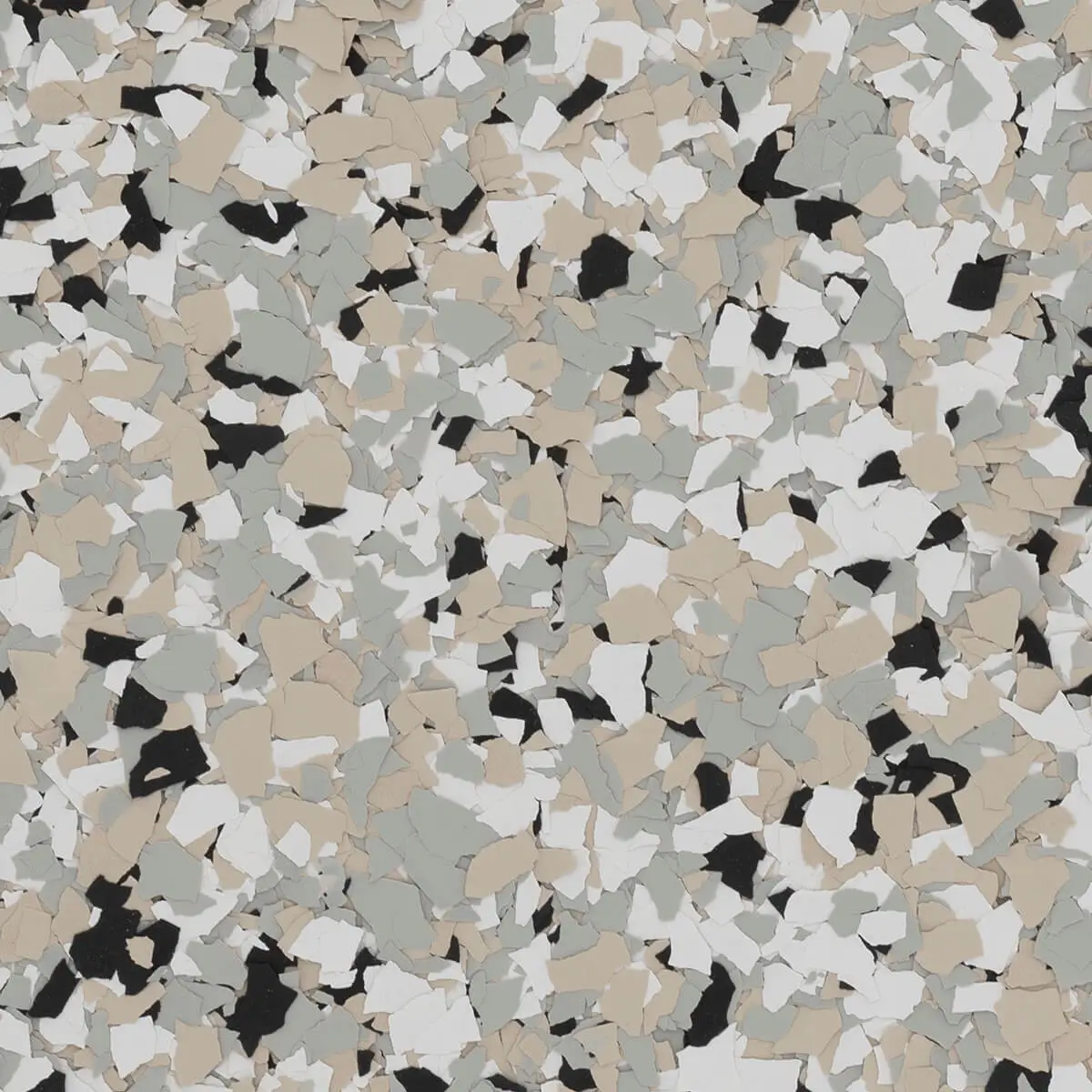
For it: it is the slab rather than something on top of the slab. Seamless, so there is no underneath. Waterproof, so a flood is a mop rather than a demolition. It seals the concrete, which stops vapor coming through and stops the dusting.
Against it: it is hard and it is cool underfoot, the same as any concrete or tile floor. It is permanent. And it needs a slab that tests within tolerance for moisture, which not every basement does.
The comparison that actually matters
Three of these four options cover the slab. One of them becomes the slab.
If your basement is a gym, a workshop, laundry, storage or a play space, which covers most basements in this valley, the coated slab wins on the practical criteria and loses only on warmth. A rug fixes warmth. Nothing fixes water under a floating floor.
If the basement is genuinely a finished living room with a sofa and a television and it has never been damp, LVP over a sealed slab is a perfectly good answer and we will say so.
Whatever you choose, test first
Every one of these four performs differently over a slab that is pushing moisture, and three of them fail. The moisture test takes a day or two and it should happen before you choose, not after.
Related
Reference
Slab moisture is measured to published standards: ASTM F1869 for calcium chloride vapor emission and ASTM F2170 for in situ relative humidity.