
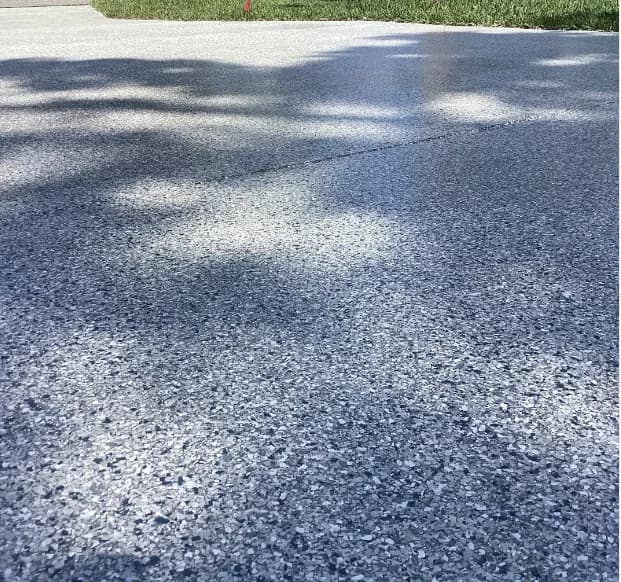
In a lifting area the rubber is the floor everybody sees. The slab under it is the floor that has to still be there in fifteen years, and it is the one people forget to specify.
Why seal a slab you are covering up
Dust. Bare concrete sheds fine powder constantly. In a gym that powder goes into the air, onto equipment, into ventilation and onto everything members touch. Sealing the slab stops it at source.
Moisture from below. A slab without a vapor barrier pushes moisture up. Under impermeable rubber it has nowhere to go, so it sits at the interface. That is how you get smell, and eventually mould, under a floor that looks fine.
Sweat and cleaner. Both find the seams between rubber tiles and reach the concrete. Porous concrete absorbs them permanently.
Rubber gets replaced. Tiles and rolls are consumables on a five to ten year cycle in a busy facility. The slab is not. Preparing it once, properly, means every subsequent rubber replacement goes onto a sound sealed surface rather than onto degraded concrete.
Zones, because a gym is not one room
Free weights and platforms. Rubber over a sealed slab. The rubber takes the impact; the coating stops the dust and the moisture.
Cardio and machines. Coated slab works directly, or rubber if noise transmission matters. Point loads from machines are modest.
Turf lanes. Turf over a sealed slab, same logic as rubber.
Studio and class space. Often coated directly, with the colour chosen to zone the room. This is where a coating earns its keep visually as well as practically.
Changing rooms, showers, wet areas. A different specification entirely, closer to a commercial kitchen: coved, seamless, sloped to drain, with serious slip resistance.
Reception and retail. The presentation floor. Higher gloss if the brand calls for it.
Treating all of that as one floor at one specification is the usual mistake in a fit out.
Colour as zoning
A coated floor lets you mark zones in the coating rather than with tape that peels. Lane divisions, platform outlines, walkway routes. Done in the build rather than on top of it, so it does not wear off.
That is a real advantage over rubber, which comes in the colours it comes in.
Impact, honestly
A coating is not an impact absorber and nobody should claim it is. A dropped barbell onto a coated slab with no rubber over it will chip the coating and possibly the concrete.
That is what the rubber is for. The two products are doing different jobs and the specification should reflect that rather than pretending one replaces the other.
Scheduling
Gyms are usually done in sections overnight or across a closure. Polyaspartic returns to service fast enough to make a weekend realistic for a decent sized area.
The constraint is nearly always equipment movement rather than curing time, and that needs planning well ahead.
Related
Reference
Dusting from unsealed concrete is a surface strength issue and one of the conditions assessed before coating. See the substrate guidance published by the International Concrete Repair Institute.