Yes. And in western Massachusetts, winter is usually the easiest time of year to get on our schedule.
This surprises people, because the trade has spent decades telling them otherwise. That advice was true, and it was about epoxy.
Why the old answer was no
Epoxy needs warmth. Most formulations want a slab above roughly 55°F and they want it there for the full cure, which is a day between coats and several days for the build. In an unheated Massachusetts garage in January that is not happening without renting heaters and tenting the space, at which point the job stops making financial sense.
So the industry standard answer became: call us in April.
Why the answer changed
Polyaspartic and polyurea cure through a different mechanism, and they keep curing in the cold. Manufacturers rate them down to about −10°F. We have installed floors in this valley in single digit weather without a problem.
The practical effect is that we work all twelve months. December through February is our quietest phone period and our most available schedule, which is a good combination if you are the one calling.
What actually limits a winter install
The air temperature is not the constraint people think it is. Three other things are.
Moisture in the slab. This is the real one. A slab that has had snow melting off cars onto it for weeks holds water, and no coating bonds to wet concrete. The garage needs to be dry before we grind, which sometimes means running a heater or a fan for a day first, or just clearing the cars out for a couple of days ahead of the install.
Dew point. If the slab is colder than the dew point of the air in the room, condensation forms on it faster than we can coat it. We check this on the day rather than assuming.
The door being open. Grinding needs ventilation, and the door being up in January means the space is cold and everything in the garage is cold. Not a dealbreaker, but it is why we want the garage cleared before we arrive rather than spending the first hour of daylight moving your things.
Why winter is arguably the better time
Your garage is already unusable. If the cars are outside for a day in February you are inconvenienced by roughly the same amount as any other February day.
The floor is ready for the worst of it. Coating in April means the slab has just come through a full winter of salt and freeze damage that you are now paying to repair before coating. Coating in December protects it through the season that does the damage.
Scheduling. In June you wait. In January you usually do not.
What we will not do in winter
Anything exterior. Patios, walkways and pool decks need a dry slab, a dry forecast and enough surface temperature that we are not fighting frost. We book those March through November and we would rather move a date than coat a patio in marginal conditions.
If your slab is actively wet, or if the garage has standing water from snow melt that has nowhere to drain, we will tell you to sort the drainage first. Coating over water is how you make an expensive problem out of a cheap one.
What to expect on the day
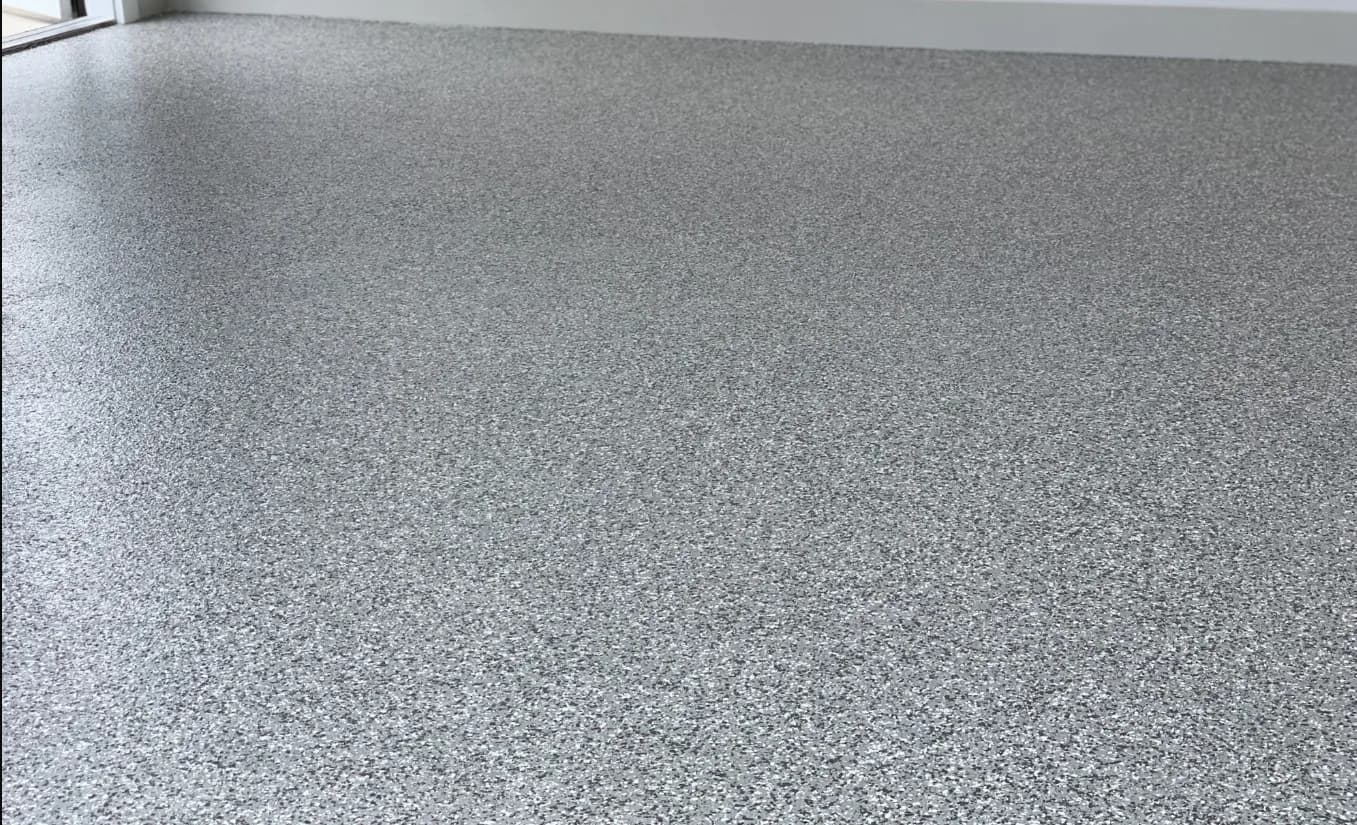
Same as any other install. We arrive early, the garage needs to be empty, grinding runs with dust extraction, and by mid afternoon the flake is down and the topcoats are going on.
The only real difference is the return to service window. In cold weather the cure runs at the slower end, so plan on 48 hours before parking rather than 24. We will tell you which before we leave.
Related
- What road salt is doing to your slab, which is the reason winter matters here
- Polyaspartic explained, including the temperature range
- Book a look at your floor
Reference
Deicer driven scaling is a documented failure mode in cold climate concrete. The Pennsylvania Aggregates and Concrete Association summarises the mechanism and the conditions that cause it.