
A pool deck is the only residential floor where people are wet, barefoot and moving quickly. That combination makes slip resistance the one specification decision with a real injury attached to getting it wrong.
It is also the one where more is not simply better, because the same texture that grips a wet foot can take skin off a knee.
The window is narrower than people think
Too smooth. A glossy sealed deck is genuinely dangerous wet. This is not a marginal effect; water on a smooth resin surface under a bare foot is close to frictionless.
Too aggressive. A deck finished with coarse aluminium oxide grips beautifully and is unpleasant to walk on, uncomfortable to sit on, and unkind to anyone who goes down on it. It also holds dirt and sunscreen and is harder to clean.
The correct answer sits between those, and it is chosen deliberately rather than defaulted to.
What we use and why
Polymer grit is our normal choice on residential pool decks. The particles are softer and rounder than mineral abrasives, so they give reliable wet grip without the sandpaper effect underfoot. They also clean more easily, which matters on a surface that gets sunscreen on it all summer.
Aluminium oxide is harder and more aggressive. It belongs on exterior steps and commercial walkways where people are wearing shoes. On a barefoot deck it is usually more than you want.
The other variable is loading: how much additive goes into the topcoat. That is adjusted by area rather than set once for the whole job.
Where the texture should change
The perimeter nearest the water. Wettest, most trafficked, most likely to be run on by a child. More texture here than in the middle.
Steps into the pool and the deck steps. The most texture on the property.
Under the ladder and around the diving area. Constantly wet.
Lounging areas away from the water. Less texture. People sit and lie here, and comfort matters more than grip on a surface that is usually dry.
Treating a deck as one uniform surface is the common mistake. It is several different use zones that happen to be connected.
Colour matters too, for a different reason
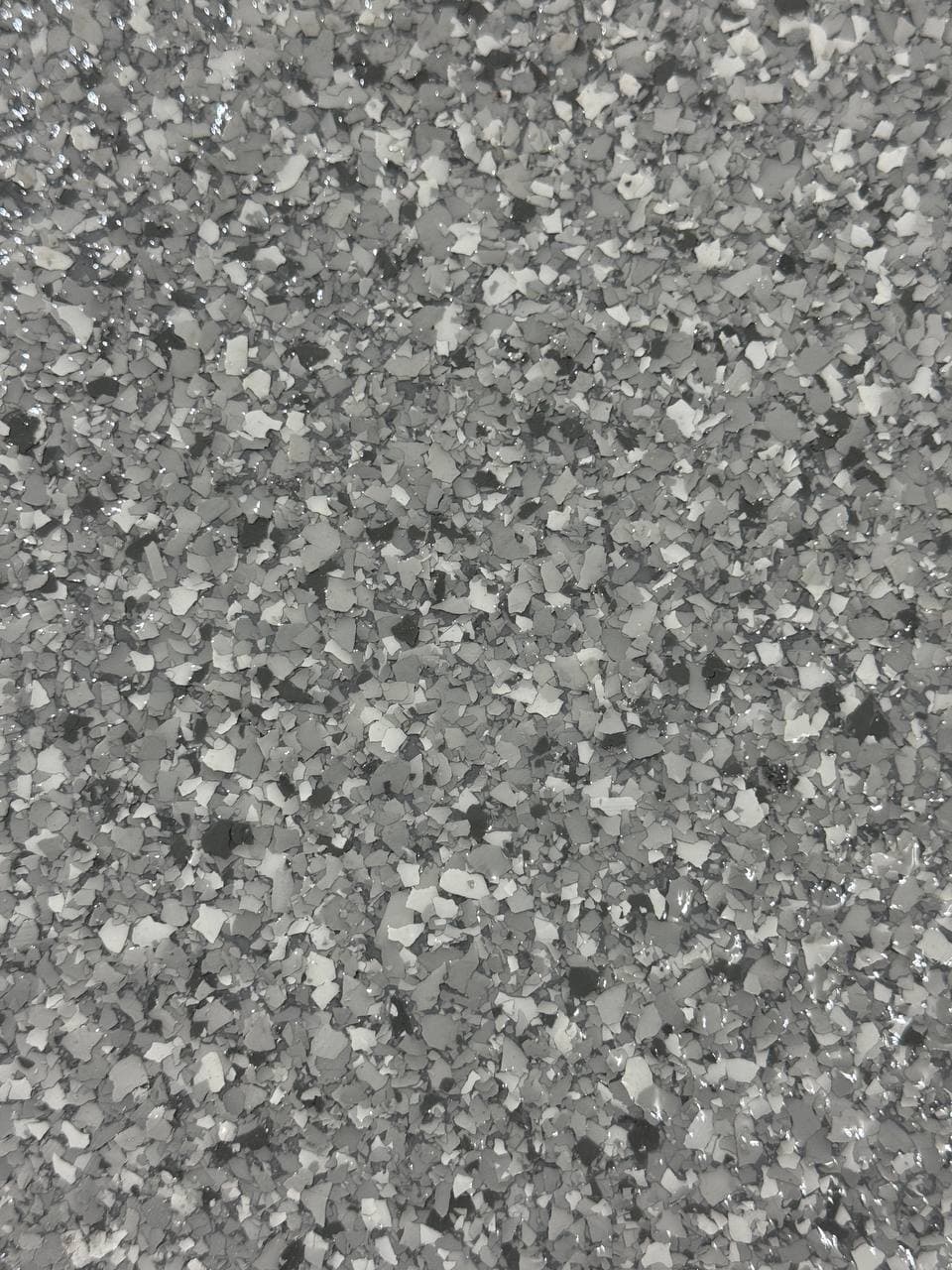
Darker blends get hot in direct sun. On a deck where people are barefoot in August, that is not an aesthetic question. Lighter blends stay noticeably cooler, which is why we push people toward the paler end of our flake blends on decks specifically.
What texture does not fix
Standing water. If the deck ponds because of a fall problem, texture reduces the risk but does not remove it, and the fall is the thing to address.
Algae and moss in shaded corners. That is a cleaning schedule, and a textured surface holds it slightly more than a smooth one. Worth knowing rather than worth avoiding texture over.
Related
- Pool decks
- Steps and walkways, where the additive choice flips
- Choosing a blend, including the heat point
Reference
Anti slip additives and their loading are specified per area in resinous flooring practice, over a substrate prepared to the profiles defined by the International Concrete Repair Institute.